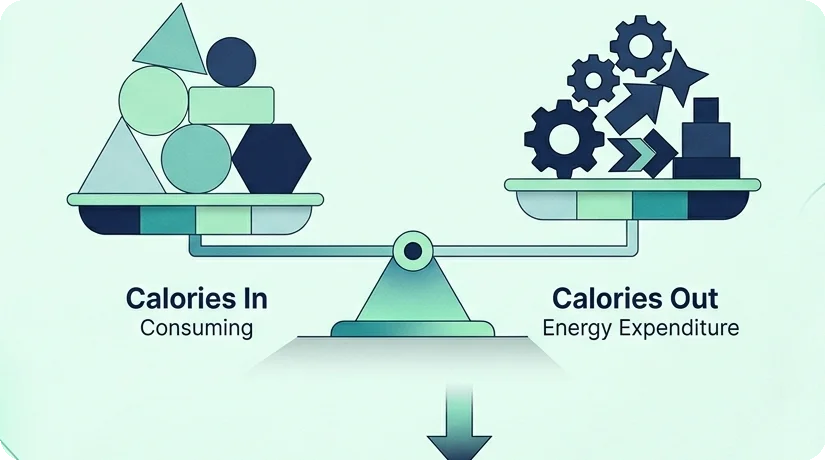
Understanding the concept of a calorie deficit is fundamental to any successful weight loss journey. Simply put, a calorie deficit means that you are consistently consuming fewer calories through food and drink than your body uses for energy each day. When this happens, your body turns to its stored energy reserves, primarily fat, to make up the difference, leading to weight loss over time. It's the core principle behind shedding pounds and achieving a healthier body composition.
How Does a Calorie Deficit Lead to Weight Loss?
Our bodies are constantly burning calories to perform essential functions, from breathing and circulating blood (known as Basal Metabolic Rate or BMR) to digesting food and powering physical activity. This total amount of calories burned is called your Total Daily Energy Expenditure (TDEE).
When you eat more calories than your TDEE, your body stores the excess energy, often as fat. Conversely, when you create a calorie deficit – eating less than your TDEE – your body doesn't have enough incoming energy to meet its needs. To compensate, it taps into stored energy, mainly body fat, to fuel these processes. This reduction in stored body fat is what results in weight loss.
It's a simple energy balance equation: Calories In < Calories Out = Weight Loss. However, while the principle is simple, implementing a calorie deficit effectively and sustainably requires understanding various strategies, careful planning, and understanding of your individual body's needs.
How Do You Calculate Your Calorie Deficit?
To create an effective calorie deficit, you first need to estimate your TDEE. This calculation considers several factors:
- Basal Metabolic Rate (BMR): The calories your body burns at rest to maintain basic bodily functions.
- Activity Level: Calories burned through exercise and daily movement (Non-Exercise Activity Thermogenesis or NEAT).
- Thermic Effect of Food (TEF): Calories burned during digestion and absorption of food.
Online calculators can provide a good starting estimate for your TDEE, often using formulas like the Mifflin-St Jeor equation. Once you have an estimated TDEE, you can then subtract a specific number of calories to create your deficit. A common recommendation for safe and sustainable weight loss is to aim for a deficit of 500-750 calories per day. This typically leads to a weight loss of 1 to 1.5 pounds per week, as one pound of fat is roughly equivalent to 3,500 calories.
For a highly personalized and accurate approach, tools like AI Weight Coach can be invaluable. AI Weight Coach uses advanced algorithms to help you calculate your individual calorie needs, factoring in your unique metabolism, activity levels, and weight loss goals, taking the guesswork out of finding your ideal deficit.
What Are Effective Ways to Create a Calorie Deficit?
Creating a calorie deficit doesn't mean starvation; it's about making smarter choices regarding your food intake and increasing your physical activity. The most effective strategies combine both approaches.
Dietary Changes to Create a Calorie Deficit
- Focus on Nutrient-Dense Foods: Prioritize whole, unprocessed foods like lean proteins, fruits, vegetables, and whole grains. These foods tend to be lower in calories but higher in nutrients and fiber, helping you feel full and satisfied.
- Increase Protein Intake: Protein is highly satiating and has a higher thermic effect than carbohydrates or fats, meaning your body burns more calories digesting it. It also helps preserve muscle mass during weight loss. Structured eating plans, such as high-protein, low-calorie meal plans, can be highly effective for managing hunger and preserving muscle mass while aiming for a calorie deficit.
- Boost Fiber Consumption: Foods rich in fiber, such as vegetables, fruits, legumes, and whole grains, add bulk to your meals without adding many calories. Fiber also aids digestion and satiety.
- Limit Sugary Drinks and Ultra-Processed Foods: These items often contain a high number of 'empty' calories, offering little nutritional value and contributing significantly to your overall calorie intake without promoting satiety.
- Practice Portion Control: Even healthy foods can contribute to a calorie surplus if eaten in excessive amounts. Learning appropriate portion sizes is crucial.
Increased Physical Activity to Create a Calorie Deficit
- Incorporate Regular Exercise: Engage in a mix of cardiovascular exercises (like brisk walking, jogging, cycling, or swimming) and strength training. Cardio burns calories during the activity, while strength training builds muscle, which boosts your metabolism even at rest.
- Increase Non-Exercise Activity Thermogenesis (NEAT): Incorporating Non-Exercise Activity Thermogenesis (NEAT) is crucial for increasing your daily calorie burn without formal workouts. Look for ways to move more throughout your day outside of structured workouts. This includes taking the stairs, parking further away, walking during phone calls, or standing more often. These small increases in activity can add up to a significant calorie burn.
What Are the Benefits of a Sustainable Calorie Deficit?
Adopting a calorie deficit sustainably offers numerous benefits beyond just weight loss:
- Healthy and Sustainable Weight Loss: Gradual weight loss (1-2 pounds per week) is more likely to be maintained long-term and reduces the risk of nutrient deficiencies or muscle loss.
- Improved Metabolic Health: Losing excess weight can improve insulin sensitivity, lower blood pressure, and reduce the risk of chronic diseases such as type 2 diabetes and heart disease.
- Increased Energy Levels: Shedding excess weight can reduce the burden on your body, leading to increased energy and reduced fatigue.
- Better Relationship with Food: Learning to make conscious food choices and understand portion sizes can lead to a healthier, more mindful approach to eating.
- Enhanced Physical and Mental Well-being: Achieving weight loss goals often boosts self-esteem, improves mood, and can enhance overall quality of life.
What Are Common Pitfalls to Avoid When Creating a Calorie Deficit?
While a calorie deficit is key, it's vital to avoid common mistakes that can hinder progress or harm your health:
- Extreme Caloric Restriction: Eating too few calories (e.g., below 1200 for women or 1500 for men without medical supervision) can slow your metabolism, lead to nutrient deficiencies, muscle loss, and be unsustainable, often resulting in rebound weight gain. Understanding concepts like metabolic adaptation is vital for sustaining a calorie deficit over extended periods, as your body may adjust its energy expenditure in response to reduced intake.
- Ignoring Hunger Cues: While some hunger is normal, constant, intense hunger can lead to binges. Ensure your diet includes enough protein and fiber to manage satiety.
- Not Tracking Accurately: Underestimating calorie intake or overestimating calories burned is common. Consistent and accurate tracking is crucial, especially in the initial stages.
- Lack of Protein: Insufficient protein can lead to muscle loss instead of fat loss, which is counterproductive for metabolism and body composition.
- Neglecting Sleep and Stress: Poor sleep and high stress levels can disrupt hormones that regulate appetite and metabolism, making a deficit harder to maintain.
How Can AI Weight Coach Help You Achieve a Calorie Deficit?
Successfully navigating a calorie deficit requires consistent effort, accurate tracking, and personalized guidance. This is where AI Weight Coach shines. Our app empowers you to:
- Personalized Calorie Targets: AI Weight Coach helps you determine your optimal daily calorie intake based on your unique profile and weight loss goals, creating a safe and effective deficit.
- Effortless Food Logging: Easily track your food intake with a comprehensive database, helping you stay within your calorie targets without feeling overwhelmed.
- Activity Integration: Seamlessly log your exercise and daily movement, giving you a clear picture of your 'calories out' and how it contributes to your deficit.
- Nutritional Insights: Understand the macronutrient breakdown of your meals, ensuring you're getting enough protein, healthy fats, and complex carbohydrates while in a deficit.
- Behavioral Support: Beyond numbers, AI Weight Coach provides tools to help you build sustainable habits, manage cravings, and stay motivated on your weight loss journey.
By using AI Weight Coach, you gain a powerful partner in understanding and implementing a calorie deficit effectively, leading to lasting results.
Conclusion
A calorie deficit is not a fad diet; it's a scientific principle that forms the cornerstone of healthy and sustainable weight loss. By consistently consuming fewer calories than your body expends, you encourage your body to burn stored fat for energy. Focusing on nutrient-dense foods, increasing physical activity, and avoiding common pitfalls are crucial for success. With the right tools and strategies, like those offered by AI Weight Coach, you can confidently and effectively create a calorie deficit to achieve your weight loss goals and improve your overall health.
Disclaimer: This article provides general information and is not intended to be a substitute for professional medical advice, diagnosis, or treatment. Always seek the advice of your physician or other qualified health provider with any questions you may have regarding a medical condition or before making any changes to your diet or exercise routine.