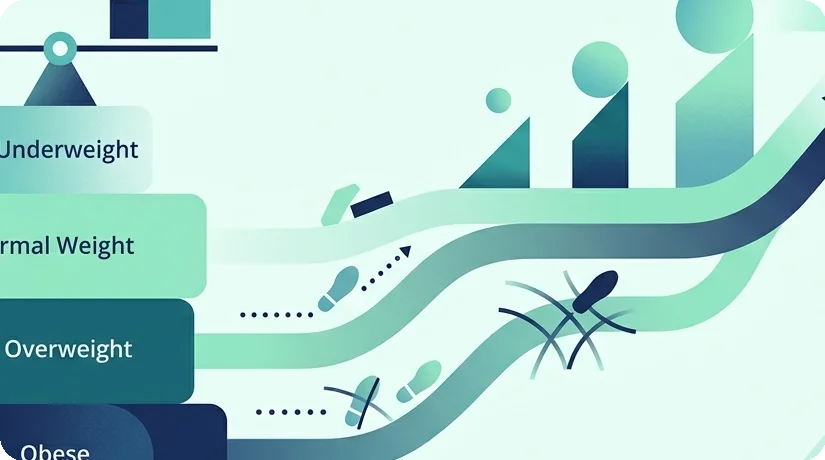
While your Body Mass Index (BMI) provides a general indicator of your weight status and can inform a starting point for physical activity, it doesn't directly dictate a precise amount you should walk to lose weight. Effective weight loss primarily hinges on creating a consistent calorie deficit, where you burn more calories than you consume. Walking is a powerful, accessible tool to help achieve this deficit, and your BMI can influence how you approach your walking routine safely and effectively.
Does Your BMI Directly Determine How Much You Should Walk for Weight Loss?
No, your BMI does not directly dictate a specific number of steps or minutes you must walk to lose weight. BMI is a screening tool that categorizes individuals into weight ranges (underweight, normal weight, overweight, obese). While useful for assessing general health risk, it doesn't account for individual body composition, fitness level, or metabolic rate – all of which are crucial for personalizing an exercise plan.
Instead, your BMI helps contextualize your overall health and potential starting points. For example, someone with a higher BMI might need to start with shorter durations and lower intensity to prevent injury, while someone with a lower BMI might need to increase intensity sooner to achieve a significant calorie burn. The underlying principle for weight loss through walking, regardless of BMI, remains consistent: burn more calories than you consume over time.
What Are the General Recommendations for Walking to Lose Weight?
Most health organizations, like the American Heart Association and the Centers for Disease Control and Prevention (CDC), recommend that adults aim for at least 150 minutes of moderate-intensity aerobic activity per week for overall health benefits. For weight loss, many experts suggest increasing this to 200-300 minutes or more per week.
- Moderate-Intensity Walking: This means walking at a pace where you can talk but not sing, and your heart rate is elevated. A brisk pace, typically 3-4 miles per hour, is a good target.
- Daily Goal: This often translates to 30-60 minutes of brisk walking most days of the week.
- Step Count: While 10,000 steps per day is a popular target, studies suggest that even increasing your daily steps to 7,000-8,000 steps can be highly effective for weight loss and health improvement. The key is to consistently increase your current activity level.
Remember, these are general guidelines. Your personal starting point and progression will depend on various factors, including your current fitness level and health status.
How Does Your Current BMI Influence Your Walking Plan?
Your BMI primarily helps to assess a safe and effective starting point and progression for your walking routine:
Higher BMI (Overweight or Obese Categories)
- Start Gradually: If you have a higher BMI, your body carries more weight, which can put additional stress on joints like knees and hips. It's crucial to start with shorter durations (e.g., 10-15 minutes) and slower paces, gradually increasing both as your fitness improves and your body adapts. Avoid high-impact activities initially.
- Higher Calorie Burn: The good news is that a heavier body burns more calories for the same distance walked compared to a lighter body. This means initial efforts can yield significant calorie expenditure.
- Focus on Consistency: Establishing a regular walking habit is more important than immediate high intensity. Aim for daily walks, even if they are short.
- Consult Your Doctor: Especially with a BMI in the obese range or if you have pre-existing health conditions (e.g., heart disease, diabetes, joint pain), it's highly recommended to consult a healthcare provider before starting any new exercise program. They can help you determine a safe and appropriate walking plan.
Normal or Overweight BMI
- Increase Intensity: If your BMI is in the normal or overweight range, you might be able to start at a brisker pace or integrate more challenging elements sooner. To optimize your efforts, consider structured walking workouts that incorporate variations in pace and incline, designed specifically for fat burning and cardiovascular improvement.
- Vary Your Routine: Incorporate inclines, intervals (alternating brisk walking with moderate pace), or longer durations to continue challenging your body and maximizing calorie burn.
- Combine with Other Exercises: While walking is an excellent starting point, incorporating other forms of effective cardio can further enhance your overall fat loss results and prevent plateaus. You might also consider complementing your walking with strength training or other aerobic activities to enhance overall fitness and metabolism.
Beyond BMI: Other Factors That Influence Your Walking Goal
While BMI provides a starting context, several other factors are equally, if not more, important in determining your ideal walking plan for weight loss:
- Current Fitness Level: A couch potato will have different starting points than someone who is already moderately active. Start where you are and build up gradually.
- Dietary Habits: Exercise alone may not lead to significant weight loss if your nutrition isn't aligned with your goals. Achieving a consistent calorie deficit is paramount for weight loss, and strategic dietary adjustments are often more impactful than exercise alone. Pairing your walking routine with delicious, high-protein low-calorie recipes can significantly support your weight loss goals by promoting satiety and preserving muscle mass. A calorie deficit is achieved through both diet and exercise.
- Health Conditions: Conditions like arthritis, heart conditions, or diabetes require specific considerations and often medical guidance for exercise.
- Time Availability: It's better to walk consistently for 20-30 minutes most days than to aim for one long, unsustainable walk per week.
- Individual Metabolism: Everyone's body responds differently to exercise and diet. What works for one person might need adjustment for another.
- Weight Loss Goals: Realistic goals are key. Aim for a sustainable weight loss of 1-2 pounds per week.
How to Set an Effective Walking Plan for Weight Loss
- Consult a Professional: Especially if you have a high BMI or underlying health conditions, speaking with a doctor or a certified fitness professional is crucial for a safe, personalized plan.
- Start Small, Build Up: Begin with what feels manageable. If that's 15 minutes of walking three times a week, that's a great start. Gradually increase duration, frequency, and intensity over several weeks.
- Focus on Briskness: Aim for a pace where you're slightly breathless but can still hold a conversation. Using a fitness tracker to monitor your heart rate can be helpful.
- Track Your Progress: Use a pedometer, fitness watch, or a simple app to log your steps, distance, and time. Seeing your progress can be highly motivating.
- Listen to Your Body: Rest when needed, and don't push through pain. Injury can derail your progress.
- Make it Enjoyable: Walk with a friend, listen to music or podcasts, or explore new routes to keep your routine fresh and engaging.
AI Weight Coach: Your Personalized Walking Partner
Integrating walking into a holistic weight loss strategy can be challenging, but it doesn't have to be. This is where tools like AI Weight Coach can be incredibly beneficial. Our app can help you set personalized walking goals based on your current fitness level, preferences, and overall weight loss objectives, rather than solely relying on a generic BMI calculation.
AI Weight Coach tracks your activity, helps you log your food intake to ensure you're maintaining that crucial calorie deficit, and offers adaptive plans to keep you progressing. By integrating your walking routine with tailored nutrition guidance and behavior psychology tools, AI Weight Coach supports a sustainable path to achieving and maintaining your weight loss goals, adapting to your unique needs every step of the way.
Disclaimer
The information provided in this blog post is for educational and informational purposes only and is not intended as medical advice. Always consult with a qualified healthcare professional before making any decisions about your health, diet, or exercise regimen, especially if you have a medical condition or are pregnant.